
Knowledge4Policy
Knowledge4Policy (K4P)

A framework to map conflicts in your team and respond adaptively to them

This article is part of the series “Science Behind the Way we Work” aimed at providing public servants with practical, evidence-based advice to help improve the way we work. By combining insights gleaned from cognitive, behavioural and organisational science, we offer readers actionable tips that they can immediately implement in their jobs.

  • Publication | 2022

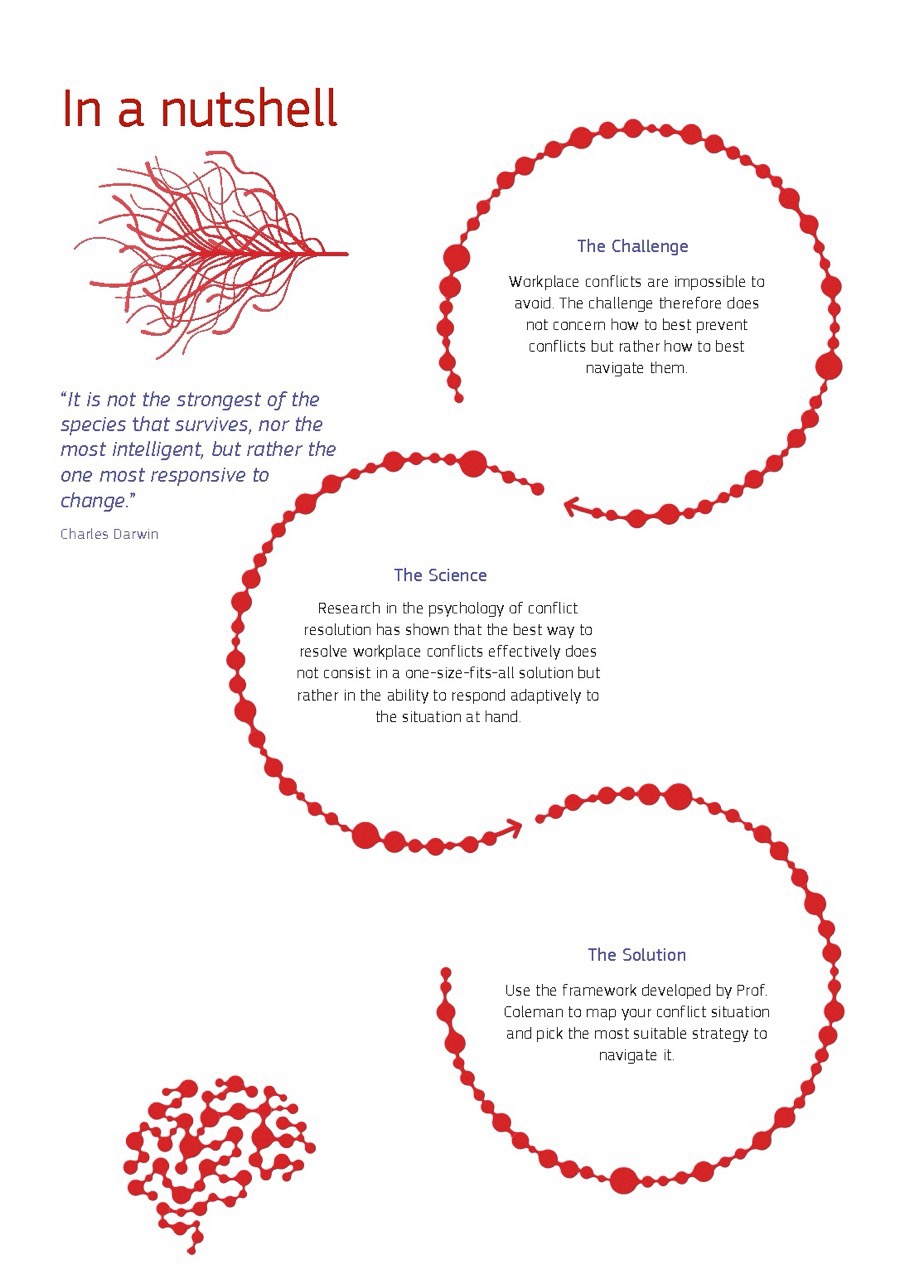
This article presents an evidence-based framework for managing workplace conflicts. Aimed at enhancing workplace dynamics and employee wellbeing, it offers a structured approach to understanding and effectively responding to different organisational conflicts. It emphasises flexibility and adaptability in conflict resolution, and encourages an appropriate mindset based on the specific nature of work relationships. It offers valuable insights for effectively navigating workplace conflicts. 

You can download the article (pdf) in the Resources section below. 
Access all the articles from the series The Science Behind the Way We Work

Resources
A framework to map conflicts in your team and respond adaptively to them (Science Behind series)
Related reading
PROJECTS AND ACTIVITIES | 04 Dec 2025
The Science Behind the Way We Work
Science can give us useful insights to help us address many of the challenges that we face in our daily work as public servants: how to collaborate...
PROJECTS AND ACTIVITIES | 04 Dec 2025
Collaborative Policymaking
Discover strategies to enhance collaboration in public administration, using insights from behavioural, cognitive, and organisational sciences to streamline efficient work and improve policies.
Privacy statements, terms and conditions.
You will be directed to the EU Login website where you can login/register as a user. Once connected, your credentials (First name, last name, username, email) will be registered in Knowledge4policy as part of your profile, which will allow you to get involved in all Knowledge4policy communities (help is available).

You are about to navigate to an external website. Please note that we are not responsible for its content.