

The K4P User Manual tells you everything you need to know from a technical point of view, to create and publish content on K4P.
The principal provider of reference data and knowledge at EU-level for all matters relating to soil.
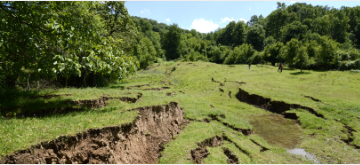
Land degradation is widespread across the European Union (EU) and refers to the long-term decline in the quality and productivity of land resources due to human activities and natural processes. It can be manifested through processes such as soil erosion, a loss of soil fertility, and changes in vegetation cover, among other impacts.
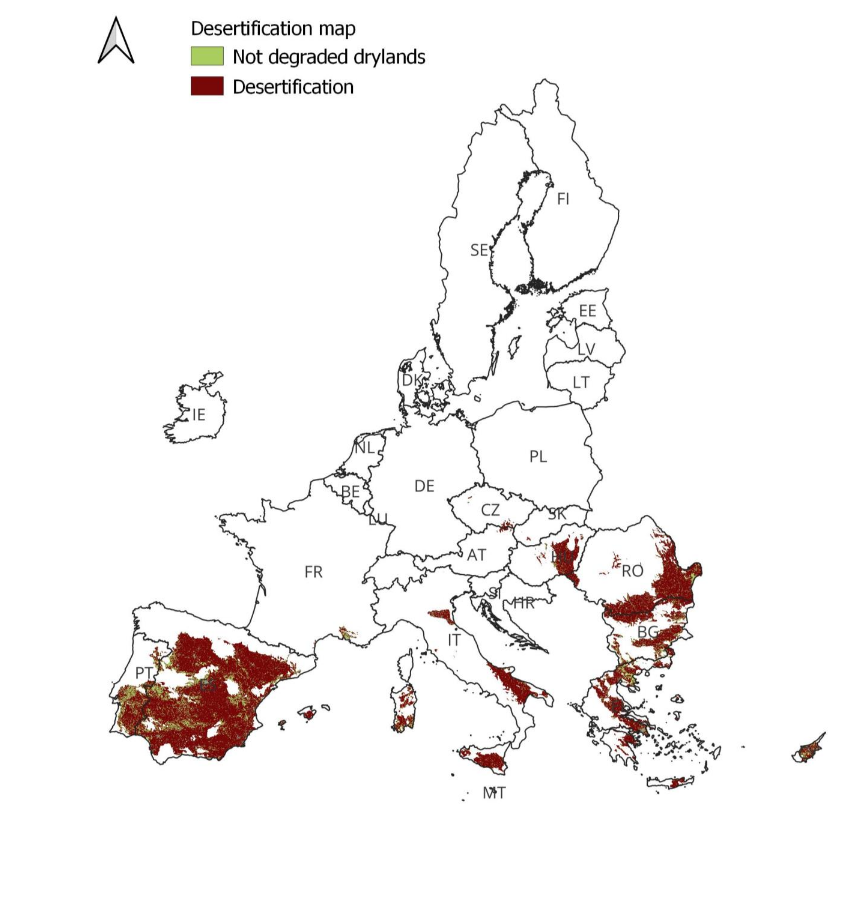
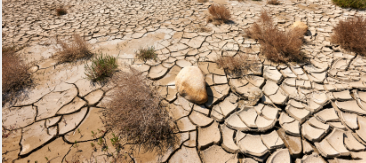
The United Nations Convention to Combat Desertification (UNCCD) defines desertification as land degradation that occurs in drylands (regions where water availability is limited). Drylands are defined by an aridity index.
Sustained periods of increasingly high temperatures, irregular rainfall distribution and intensity in recent years, together with increased competition for land, remind us of the pressing importance of this problem. In addition, climate change scenarios indicate an increasing vulnerability to aridity across, but not limited to, southern and central Europe.
The European Court of Auditors has recommended that the European Commission, in collaboration with Member States, develop a methodology and relevant indicators—starting with the three used by the UNCCD—to assess desertification and land degradation across the EU.
This should include the collection and analysis of pertinent data, presented regularly in a clear and user-friendly format, ideally through interactive maps for public access.
The ECA report recommended developing a methodology to assess desertification and land degradation across the EU, with the results presented to the public through clear, interactive maps.
Following an ECA recommendation, EUSO is exploring how the UNCCD land degradation assessment approach can be adapted to monitor desertification in the EU.
Consult our user manual or editorial guidance
