


The K4P User Manual tells you everything you need to know from a technical point of view, to create and publish content on K4P.
We mobilise people and resources to create, curate, make sense of and use knowledge to inform policymaking across Europe.
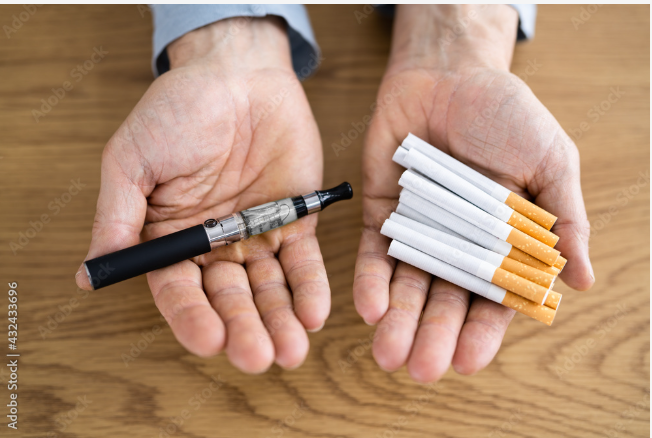
The European Commission’s evaluation shows EU tobacco rules have cut smoking and deaths, but the rapid rise of e‑cigarettes, heated‑tobacco products and nicotine pouches create challenges, among them for public‑health and gateway‑to‑addiction, especially for the young. Its findings are supported by three JRC’s Science‑for‑Policy reports on costs, health impacts and usage trends.
Tobacco smoking is still a major habit across the EU, with roughly 24 % of adults and 18 % of 15‑year‑old adolescents reporting smoking. The number of young smokers aged 15-24 is particularly concerning, with 24.1% of individuals aged 20-24 reporting smoking at least occasionally, compared to 14.8% of those aged 15-19. Electronic cigarettes and heated tobacco products have become increasingly popular since 2019 and are now reshaping the EU tobacco product landscape. Their growth is most noticeable among people under 30 years of age.
On the 2nd of April 2026, the European Commission published its evaluation of the EU tobacco control framework. Its findings show that EU rules have contributed to a significant decline in smoking and tobacco-related deaths. Nevertheless growing challenges, linked to the rapid emergence of novel tobacco and nicotine products, particularly among young people, are also acknowledged.
Research work from the Joint Research Centre, combining new data generation with syntheses of existing knowledge, underpinned the Commission’s Staff Working Document. The evaluation identifies the rise of e-cigarettes, heated tobacco products and nicotine pouches, as introducing new public health concerns and as a gateway to nicotine addiction and in some cases, traditional smoking, in particular for younger generations.
The recent JRC Science for Policy Reports provided crucial scientific support for these findings, particularly on the health-related costs of tobacco use, the health impacts of novel tobacco and nicotine products, and on the trends and patters of use of tobacco and nicotine products in the EU.
The evaluation concludes with a need to adapt the regulatory framework, proceeding with an impact assessment and proposal for a revision of the tobacco control framework.
In this context, the JRC also analysed the responses of a targeted Member State consultation on the administrative efforts and costs related to the implementation of the current EU tobacco control framework, providing key evidence on the efficiency and effectiveness of the legal framework to support the evaluation.
Specific JRC findings are outlined below.
E-cigarettes are especially popular among young people
The consumption of novel and emerging tobacco and nicotine products rises steeply among those younger than 30.
In 2023, young adults in their twenties reported the highest daily or occasional use of e-cigarettes and nicotine pouches of any age group.
Heated‑tobacco products are also popular for daily or occasional consumption in the 20‑24 and 25-29 age groups, though slightly less so than among 30‑44‑year‑olds.
For many teenagers, e‑cigarettes are the first product they use regularly, with roughly one‑in‑five 15‑19‑year‑olds and more than one‑in‑ten 20‑24‑year‑olds who began with e‑cigarettes rather than cigarettes or other traditional tobacco products.
How safe are these smoke-free products?
The relative novelty of these products makes it difficult to assess long‑term health effects, as they have not been on the market long enough. Nevertheless, current evidence points to several concerns:
Tobacco use impact on our healthcare systems
Traditional tobacco use already costs the EU roughly 80.7 billion euro each year – half in direct health‑care expenses and half in lost productivity and informal care. Chronic Obstructive Pulmonary Disease has the highest weight on the total (33.4% of direct costs), followed by diabetes (21.7%) and ischemic heart diseases (8.8%). Health‑related tobacco costs vary considerably across Member States.
On average in the EU, direct tobacco use-related healthcare costs represent 2.5% of total healthcare expenditure. It was not possible to analyse healthcare costs associated with novel and emerging tobacco and nicotine products due to insufficient evidence and relatively short follow-up time. Eurobarometer data (2023) reveal that the percentage of smokers who use them without using traditional tobacco is rather small (less than 5% for e-cigarettes and heated tobacco products). However, as the use of e-cigarettes by young people increases the likelihood of using other tobacco products, this could further affect future health-related tobacco costs.
Full citation of the reports:
Perez-Cornago, A., Sarasa-Renedo, A., Jarach, C., Wollgast, J. and Maragkoudakis, P., Health outcomes associated with the use of e-cigarettes, heated tobacco products, and nicotine pouches, Publications Office of the European Union, Luxembourg, 2026, https://data.europa.eu/doi/10.2760/0061469, JRC146139. https://publications.jrc.ec.europa.eu/repository/handle/JRC146139
Salari, P., Maragkoudakis, P.-A. and Wollgast, J., The health-related costs attributable to tobacco in the EU, Publications Office of the European Union, Luxembourg, 2026, https://data.europa.eu/doi/10.2760/5833286, JRC146176. https://publications.jrc.ec.europa.eu/repository/handle/JRC146176
Berlingieri, F., Casabianca, E. and Vlachos, S., Trends and patterns of use of tobacco and nicotine products in the EU, Publications Office of the European Union, Luxembourg, 2026, https://data.europa.eu/doi/10.2760/3233096, JRC143862. https://publications.jrc.ec.europa.eu/repository/handle/JRC143862
Consult our user manual or editorial guidance

Comments (0)
Login (or register) to follow this conversation, and get a Public Profile to add a comment (see Help).
More information and links
24 Apr 2026
Related reading
National and international policy recommendations and implemented policies aiming to decrease tobacco use or exposure to tobacco smoke
Tobacco and Smoking
EUWA - The European Water Academy